



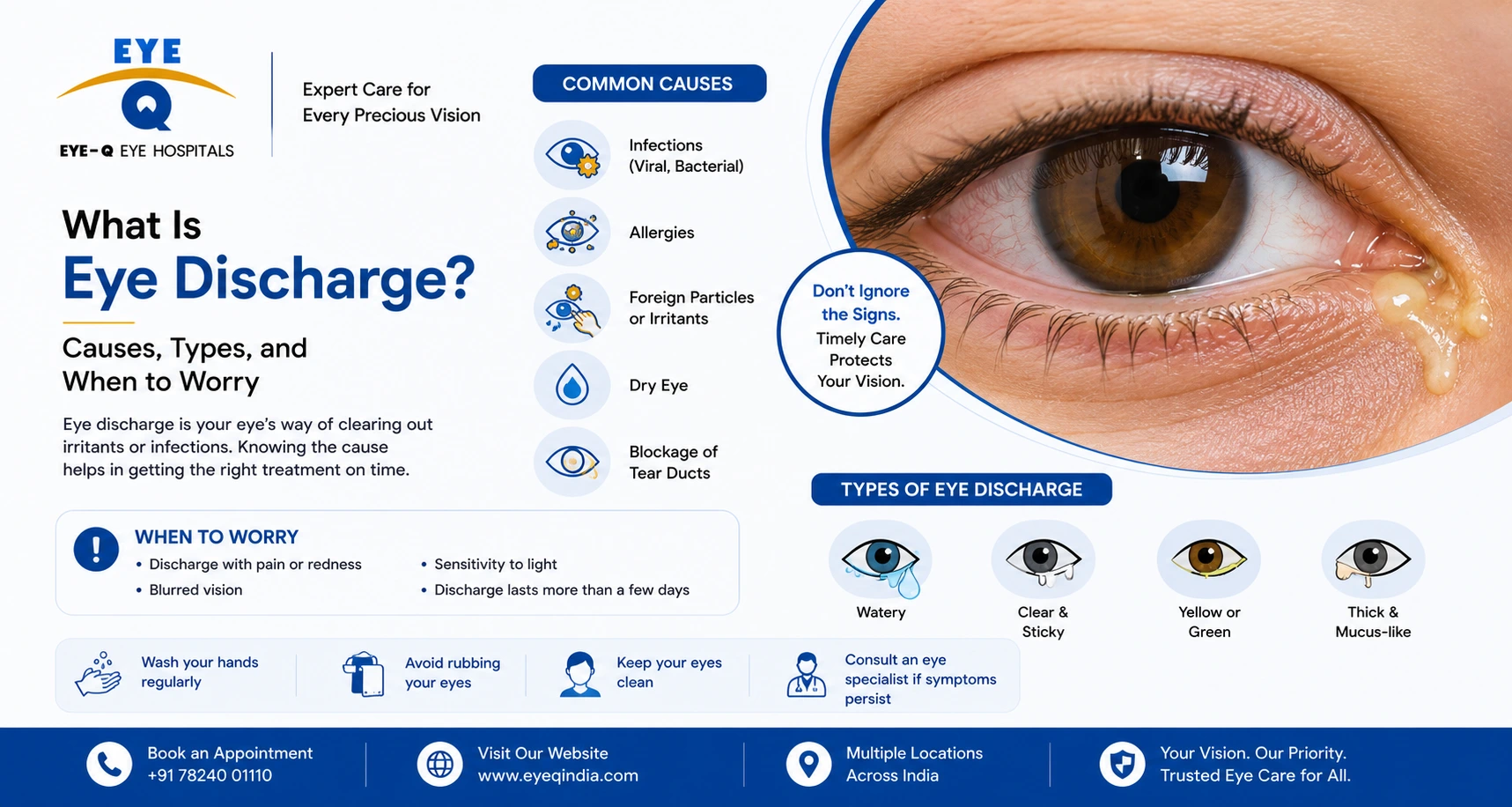
Waking up with a bit of crust in the corner of your eye is something almost everyone experiences. But when eye discharge becomes heavier than usual, changes colour, or won’t go away, it’s natural to wonder what’s causing it. This guide walks through why eye discharge happens, the different types you might notice, home care that actually helps, and the specific warning signs that mean it’s time to see an eye specialist.
What Is Eye Discharge?
Eye discharge is the mixture of mucus, oil, dead skin cells, and other debris that your eyes produce as part of their natural cleaning process. Throughout the day, blinking spreads a thin layer of tears across the eye’s surface and washes this material away before you notice it. At night, when you’re not blinking, this discharge collects in the corners of the eyes and along the lash line which is why “sleep” or eye crust is most obvious first thing in the morning.
A small amount of dried or crusty discharge out of eye corners after waking up is completely normal and nothing to be concerned about. It becomes worth paying attention to when the amount increases sharply, the texture changes, or it’s joined by other symptoms like redness, pain, or blurred vision.
Common Causes of Eye Discharge
Several everyday and medical factors can trigger eye discharge:
- Conjunctivitis (pink eye): Viral, bacterial, or allergic inflammation of the conjunctiva is one of the most frequent reasons for noticeable eye discharge. Read more about conjunctivitis symptoms and causes and how it’s diagnosed.
- Allergies: Pollen, dust, and pet dander can irritate the conjunctiva and lead to watery, stringy discharge, often alongside itching. Our detailed guide to allergic conjunctivitis covers common triggers and prevention.
- Dry eyes: When tear production drops, the eye’s surface can respond by producing extra mucus, which shows up as thin, stringy strands.
- Blepharitis: Inflammation along the eyelid margins commonly produces flaky, crusty buildup near the lashes.
- Styes and chalazia: A blocked or infected oil gland at the eyelid margin can ooze localized, yellowish discharge along with swelling and tenderness. Our guide on swollen eyelid causes and home remedies explains how to tell these apart.
- Blocked tear ducts: More common in infants, but seen in adults too, this causes discharge that keeps returning because tears can’t drain normally.
- Irritants and environmental factors: Smoke, dust, chlorine, air conditioning, and screen time can all increase discharge, especially during seasonal changes. Our piece on common summer eye problems has more on how weather affects your eyes.
- Other eye infections: Keratitis and other corneal infections can also produce discharge alongside pain and light sensitivity see our overview of eye infections and their management.
Types of Eye Discharge and What They Mean
The appearance of the discharge itself is one of the best early clues to what’s causing it.
White or clear, watery discharge: Thin, watery eye discharge white in colour or clear is usually linked to viral conjunctivitis, allergies, or dry eyes. It tends to be less sticky than infected discharge and often clears with lubricating drops and cool compresses.
Stringy white secretion from eye corners: Thin, rope-like white secretion from eye surfaces is commonly associated with dry eye or allergic conjunctivitis rather than infection. Pulling at these strands can irritate the eye further, so gentle cleaning is a better approach.
Thick, yellow or green discharge: This purulent, sticky discharge points toward bacterial conjunctivitis. It’s often heavy enough to glue the eyelids shut overnight and usually needs a doctor’s evaluation for possible antibiotic drops.
Foamy discharge: Often linked with blepharitis or meibomian gland dysfunction, foamy discharge tends to appear along with crusty eyelid margins.
Discharge with a pink or red tinge: This can follow vigorous rubbing or minor surface irritation and is usually not serious on its own, though persistent bleeding-tinged discharge should be checked.
Eye Discharge Treatment: What Helps
Eye discharge treatment depends entirely on the underlying cause, so the right first step is identifying what’s behind it rather than guessing.
For mild, everyday discharge
- Use a warm, damp cloth to gently loosen crusted discharge, wiping from the inner corner of the eye outward.
- Use a fresh cotton pad or cloth for each eye to avoid spreading infection from one eye to the other.
- Preservative-free lubricating eye drops can ease dryness-related discharge.
- Avoid rubbing your eyes, as this can worsen irritation and spread bacteria.
For suspected infections or allergies
- Bacterial conjunctivitis usually needs prescription antibiotic drops or ointment.
- Viral conjunctivitis is generally self-limiting, and treatment focuses on comfort measures like cool compresses.
- Allergic discharge often responds to antihistamine drops and avoiding the triggering allergen.
- Contact lens wearers should switch to glasses until the eyes are fully clear, since lenses can trap bacteria and prolong the problem.
Self-treating persistent or unusual eye discharge without a proper diagnosis can delay the right eye discharge treatment and, in some infections, risk complications so home care should be a short-term measure, not a substitute for a professional opinion when symptoms don’t improve.
When Should You Worry About Eye Discharge?
Most eye discharge is harmless, but certain signs call for a prompt visit to an eye specialist:
- Discharge that is thick, colored (yellow or green), or doesn’t improve after a few days
- Eyelids stuck shut or difficulty opening the eye in the morning
- Discharge paired with eye pain, redness that won’t settle, or swelling
- Sensitivity to light or blurred and changing vision
- Discharge in a contact lens wearer, which always deserves quick attention
- Discharge in a newborn or young infant
- Fever or other body-wide symptoms alongside the eye discharge
If you notice any of the above, it’s best not to wait it out. You can learn more about related warning signs in our guide to understanding eye pain and when it’s serious, since discharge and eye pain often appear together in the same underlying conditions.
Preventing Eye Discharge
- Wash your hands before touching your eyes or applying eye drops
- Never share towels, pillowcases, or eye makeup
- Clean contact lenses properly and replace them as recommended
- Remove eye makeup before sleeping
- Manage allergies with air purifiers and by limiting exposure to known triggers
- Stay ahead of dry eye with regular lubricating drops if you spend long hours on screens
When to See an Eye Specialist
Eye discharge is usually a normal part of how your eyes clean themselves, but a sudden change in colour, amount, or texture especially with pain, redness, or vision changes is your eye’s way of signaling that something needs attention. If you’re experiencing persistent or concerning eye discharge, the team at EyeQ India can help identify the exact cause and recommend the right treatment across our network of eye hospitals. Book an appointment with EyeQ India for a thorough eye examination.
Frequently Asked Questions
When should I worry about eye discharge?
You should see an eye doctor if the discharge is thick or coloured, keeps your eyelids stuck shut, doesn’t improve within a few days, or comes with pain, redness, light sensitivity, or blurred vision.
How do you get rid of eye discharge?
Gently clean the area with a warm, damp cloth, avoid rubbing your eyes, and use lubricating drops for mild cases. If the discharge is thick, coloured, or persistent, it’s best to get an eye specialist to confirm the cause and prescribe the correct eye discharge treatment.
What is the best home remedy for eye discharge?
A warm compress held over closed eyes for a few minutes helps loosen crusted discharge and soothe irritation. Always use a clean cloth and wipe from the inner corner of the eye outward to avoid spreading it further.
What medication is used for eye discharge?
This depends on the cause: bacterial infections are treated with prescription antibiotic drops or ointment, allergies respond to antihistamine drops, and dry-eye-related discharge often improves with preservative-free lubricating drops. A doctor’s diagnosis is important before starting any medication.
How do I stop my eyes from weeping?
Watery eyes often relate to allergies, dry eye, or mild irritation. Cool compresses, lubricating drops, and identifying and avoiding the trigger (dust, smoke, allergens) usually help. Persistent watering deserves an eye check to rule out a blocked tear duct or infection.
Is white eye discharge normal?
A small amount of white or clear eye discharge, especially after waking up, is generally normal. However, an increase in white, stringy secretion from eye surfaces throughout the day can point to dry eye or mild allergic irritation and is worth monitoring.
Is eye discharge in babies a cause for concern?
Mild, sticky discharge in babies is often due to a blocked tear duct and usually resolves within the first year with gentle massage, as advised by a paediatric eye specialist. Discharge with redness, swelling, or that appears in the first few days of life should be evaluated promptly.
Can eye discharge be contagious?