


Quick Answer
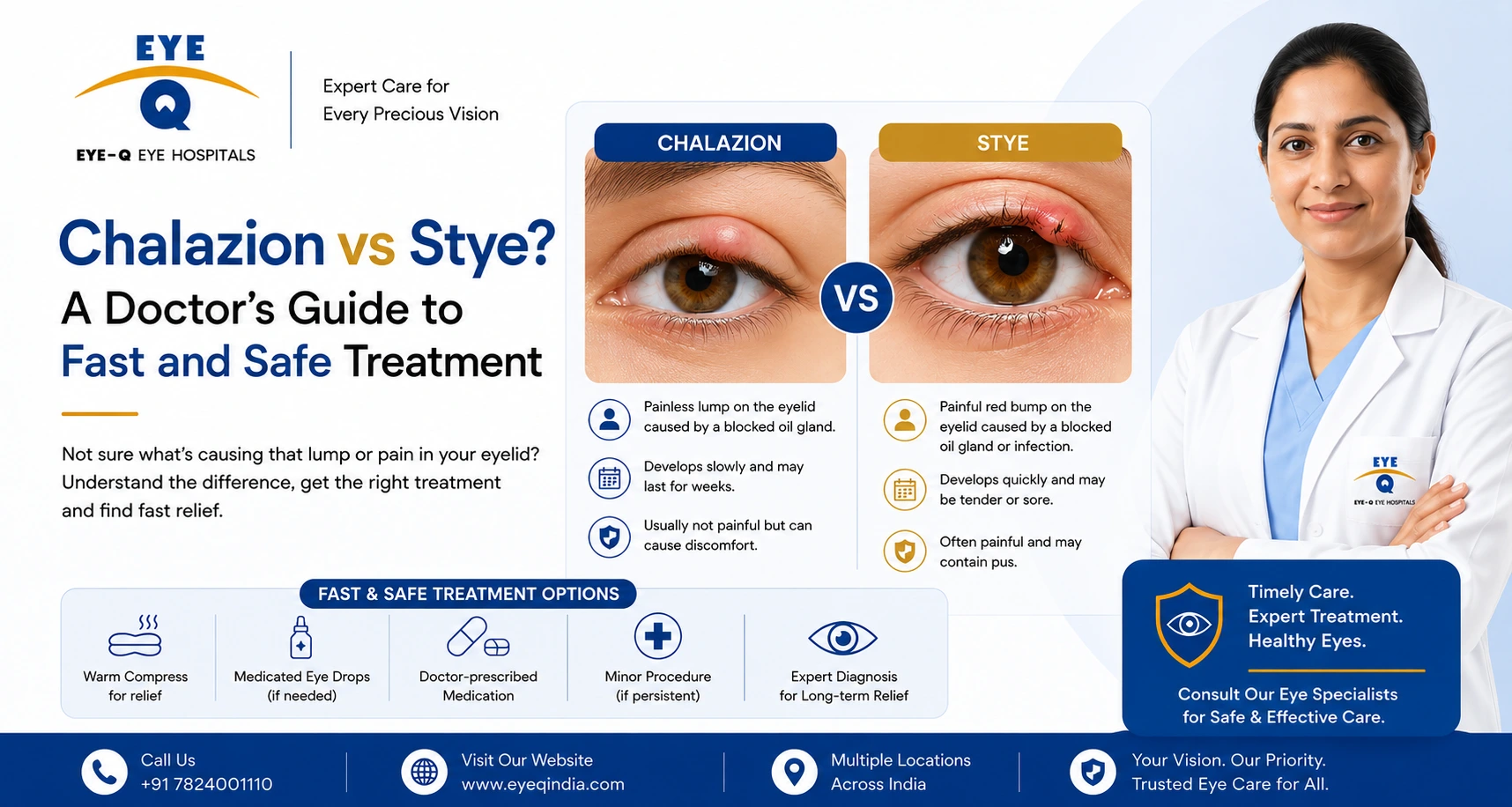
A stye is a painful, bacterial infection that appears right at the eyelid’s lash line and usually clears in 1–2 weeks. A chalazion is a painless lump caused by a blocked meibomian (oil) gland that sits further back on the eyelid and can take 4–6 weeks (or longer) to resolve. The fastest way to tell them apart if it hurts to touch, it’s probably a stye; if it’s a firm, painless lump, it’s probably a chalazion. Both respond well to warm compresses as first-line care.
A red, swollen lump on your eyelid is alarming the first time you notice it and the internet doesn’t make it easier, because “stye” and “chalazion” get used almost interchangeably. They aren’t the same thing. Getting the chalazion vs stye distinction right matters because it decides whether you need antibiotics, a warm compress, or a same-week visit to an ophthalmologist. This guide breaks down the stye versus chalazion question in plain language: what causes each, how to spot the difference in under a minute, and exactly how chalazion vs stye treatment differs.
Already dealing with a wider swollen eyelid and not sure if it’s one of these two? Our guide to swollen eyelid causes and home remedies covers ten possible causes side by side.
What Is a Stye?
A stye medically called a hordeolum is an acute bacterial infection of a small oil or sweat gland at the edge of your eyelid, usually near the base of an eyelash. It is almost always caused by Staphylococcus bacteria that are normally present on the skin.
What a stye typically looks and feels like:
- A red, tender lump right on the eyelid margin, at the lash line
- Painful from the moment it appears worse when you blink or touch it
- Often develops a small yellow or white pus-filled tip within a few days, similar to a pimple
- Comes on quickly, usually within 24–48 hours
- Can cause the eye to water or feel gritty
There are two types an external stye (at the base of an eyelash) and an internal stye (inside the eyelid, from a blocked meibomian gland that becomes infected). Most styes drain on their own and heal within 1–2 weeks with warm compresses. Left unaddressed, an internal stye is also one of the more common ways a chalazion gets started more on that below.
What Is a Chalazion?
A chalazion is a firm, usually painless lump that forms when one of the meibomian glands tiny oil-producing glands lining the inside edge of your eyelid becomes blocked. Unlike a stye, a chalazion is not an active bacterial infection, it’s an inflammatory reaction to oil that’s trapped and can’t drain normally. For this reason, it’s sometimes called a meibomian cyst or eyelid cyst.
What a chalazion typically looks and feels like:
- A firm, round lump that sits farther back on the eyelid, away from the lash line
- Usually painless, though it can feel like mild pressure, especially early on
- Grows slowly over days to weeks rather than appearing overnight
- More common on the upper eyelid (which has roughly twice as many meibomian glands as the lower lid)
- Can occasionally grow large enough to press on the eyeball and blur vision temporarily
Chalazia are far more common than most people realise anyone can develop one, though people with blepharitis, rosacea, or seborrheic dermatitis are more prone to recurrent chalazia. According to the American Academy of Ophthalmology, a chalazion is not usually painful, rarely causes the whole eyelid to swell, and typically develops farther back on the eyelid than a stye does.
Chalazion vs Stye: Key Differences at a Glance
| Feature | Stye (Hordeolum) | Chalazion |
|---|---|---|
| Cause | Bacterial infection of an eyelash follicle or oil gland | Blocked meibomian (oil) gland inflammatory, not infectious |
| Pain | Painful, tender, throbs when touched | Usually painless (unless secondarily infected) |
| Location | Right at the eyelid margin, near the lash line | Farther back on the eyelid, away from the lash line |
| Onset | Sudden appears within 1–2 days | Gradual develops over days to weeks |
| Appearance | Red, may develop a yellow/white pus point | Firm, round lump; skin often normal colour |
| Duration | 1–2 weeks with home care | 4–6 weeks on average; can persist for months |
| Contagious | No (though good hygiene still matters) | No |
| First-line treatment | Warm compress; antibiotic drops/ointment if needed | Warm compress and lid massage |
| If it doesn’t resolve | Doctor may lance and drain it | Steroid injection or minor surgical drainage |
How to Tell If You Have a Stye or a Chalazion
If you only remember one rule from this guide, make it this: pain and location are your two fastest clues.
- Does it hurt? A stye is tender to the touch and can throb on its own. A chalazion is usually painless you might feel pressure, but sharp pain is uncommon unless it becomes inflamed or infected.
- Where exactly is it? Run a finger (gently, over closed lids, with clean hands) along your lash line. A bump sitting right at the edge, among the lashes, points to a stye. A lump sitting deeper in the lid, away from the lashes, points to a chalazion.
- How fast did it appear? Styes show up almost overnight. Chalazia build up gradually.
- Is there a visible pus point? A whitish or yellow tip is typical of a stye and not of an uninflamed chalazion.
If you’re still unsure after checking these four things or the lump is affecting your vision it’s worth a quick check-up rather than guessing. You can book an eye check with EyeQ India for an accurate diagnosis.
Chalazion vs Stye: Causes and Risk Factors
Both conditions start the same basic way an oil gland in the eyelid gets blocked but what happens next is different.
Stye causes:
- Bacterial infection, usually Staphylococcus aureus, entering a blocked follicle or gland
- Touching the eyes with unwashed hands
- Using old or contaminated eye makeup
- Not removing eye makeup before sleeping
- Existing blepharitis (eyelid margin inflammation)
Chalazion causes:
- A blocked meibomian gland where trapped oil triggers inflammation, without active infection
- Can develop after a stye that didn’t drain completely
- Thicker-than-normal oil secretions (common with meibomian gland dysfunction)
Shared risk factors for both stye and chalazion include blepharitis, rosacea, seborrheic dermatitis, diabetes, and a personal history of either condition which is why people who get one often get the other.
Can a Stye Turn Into a Chalazion?
Yes this is one of the most common points of confusion. If a stye’s oil gland doesn’t fully drain, the trapped, hardened material can continue to sit in the gland long after the infection has cleared, forming a firm, painless lump: a chalazion. This is why a “stye” that isn’t going away with antibiotics or warm compresses is sometimes actually a chalazion by the time it’s examined the infection is gone, but the blockage remains. It’s a good reason not to self-diagnose past the one-week mark and instead get it looked at.
Chalazion vs Stye Treatment
The good news the first-line home treatment is identical for both a warm compress. Where they differ is what happens if home care isn’t enough.
Step 1: Warm compress (for both)
Soak a clean, soft cloth in warm (not hot test on your wrist first) water. Hold it gently against the closed eyelid for 10–15 minutes, 3–5 times a day. Warmth softens the blocked oil so it can drain naturally, whether the underlying cause is infection (stye) or blockage (chalazion).
Step 2: Gentle lid hygiene
Clean the eyelid margin daily with a clean, damp cotton pad. Avoid eye makeup and contact lenses until the bump has fully resolved, since both can reintroduce bacteria or irritation.
Step 3: What NOT to do
Never squeeze or try to pop either a stye or a chalazion. This can push infected or irritant material deeper into the eyelid tissue and make things considerably worse.
If a stye doesn’t improve within 7–10 days
Your eye doctor may prescribe an antibiotic eye drop or ointment to clear the underlying infection. In rare persistent cases, a small in-office incision is used to drain it.
If a chalazion doesn’t improve within 4–6 weeks
Because there’s no active infection to target, antibiotics generally don’t help an uncomplicated chalazion. Instead, your ophthalmologist may recommend:
- A corticosteroid injection directly into the lump, to reduce inflammation and shrink it over several weeks
- Minor surgical drainage (incision and curettage) for large or stubborn chalazia, done under local anaesthesia as a quick outpatient procedure
EyeQ India’s oculoplasty specialists handle eyelid procedures like these routinely, and our general eye care team can advise on the right next step whether you’re dealing with a stubborn stye or a chalazion that won’t budge.
Prevention: Keeping Both Away
- Wash your hands before touching your eyes or removing contact lenses
- Remove eye makeup completely every night, replace mascara and eyeliner every 2–3 months
- Treat underlying blepharitis or meibomian gland dysfunction with regular warm compresses and lid hygiene, even between flare-ups
- Don’t share towels, pillowcases, or eye makeup
If you’re prone to recurrent eye infections, ask your ophthalmologist about a longer-term eyelid hygiene routine.
When to See a Doctor
Most styes and chalazia are harmless and resolve with simple care, but see an eye specialist if:
- The lump hasn’t improved after 1–2 weeks (stye) or 4–6 weeks (chalazion) of warm compresses
- It keeps growing or starts affecting your vision
- The whole eyelid becomes swollen, hot, or hard this can point to a spreading infection (cellulitis) and needs urgent attention
- You develop a fever alongside the eyelid swelling
- The bump keeps recurring in the same spot
- You’re also experiencing eye pain that feels out of proportion to a simple lump
Not sure which one you’re dealing with, or it’s been going on longer than it should? Book an appointment with EyeQ India available across Gujarat, Haryana, Uttar Pradesh, and Uttarakhand.
Key Takeaways
- Pain + location are the fastest clues: a painful bump at the lash line is likely a stye; a painless lump farther back on the lid is likely a chalazion.
- Warm compress is first-line care for both — 10–15 minutes, 3–5 times a day.
- Styes usually clear in 1–2 weeks; chalazia can take 4–6 weeks or longer.
- A stye can turn into a chalazion if the gland doesn’t fully drain after the infection clears.
- Antibiotics help styes, not chalazia — persistent chalazia usually need a steroid injection or minor drainage instead.
- Never squeeze or pop either one — this can worsen swelling or spread infection.
- See a doctor if a lump doesn’t improve in the expected timeframe, keeps growing, affects vision, or comes with fever or spreading redness.
Medical Disclaimer
This article is for informational purposes only and does not replace professional medical advice. If you have a persistent or worsening eyelid lump, please consult a qualified ophthalmologist.
Frequently Asked Questions
How do I know if I have a chalazion or a stye?
Check for pain and location. A stye is tender, appears suddenly, and sits right at the lash line. A chalazion is usually painless, develops gradually, and sits farther back on the eyelid. If it hurts to touch and looks like a small pimple, it’s more likely a stye; if it’s a firm, painless lump that’s been growing slowly, it’s more likely a chalazion.
What’s worse, a stye or a chalazion?
Neither is typically dangerous, but they differ in how they affect you day to day. A stye is more painful in the short term but usually clears faster (1–2 weeks). A chalazion is usually painless but can persist for weeks to months and, if large, may press on the eye and blur vision temporarily. Either one that keeps growing, doesn’t resolve, or affects vision should be assessed by an eye doctor.
What are the first signs of a stye?
The earliest signs are a small area of redness and tenderness right at the eyelid margin, often near an eyelash, followed within a day or two by swelling and a visible yellow or white pus point. The eye may also water or feel gritty, and blinking can feel uncomfortable.
What is the fastest way to get rid of a chalazion or stye?
Warm compresses, applied for 10–15 minutes, 3–5 times a day, are the fastest effective home method for both. For a stye that persists past a week, antibiotic eye drops can speed things along. For a chalazion that persists past 4–6 weeks, a steroid injection or minor in office drainage procedure from an ophthalmologist works faster than waiting it out.
What antibiotic is good for a stye or chalazion?
Antibiotic eye drops or ointments (such as those containing ciprofloxacin or erythromycin) are commonly prescribed for a stye when it’s not improving with warm compresses alone, since a stye is a bacterial infection. Antibiotics are generally not effective for an uncomplicated chalazion, since it isn’t caused by infection those are usually managed with steroid injections or drainage instead. Always use a prescribed antibiotic only as directed by your eye doctor rather than a leftover or over-the-counter product.