



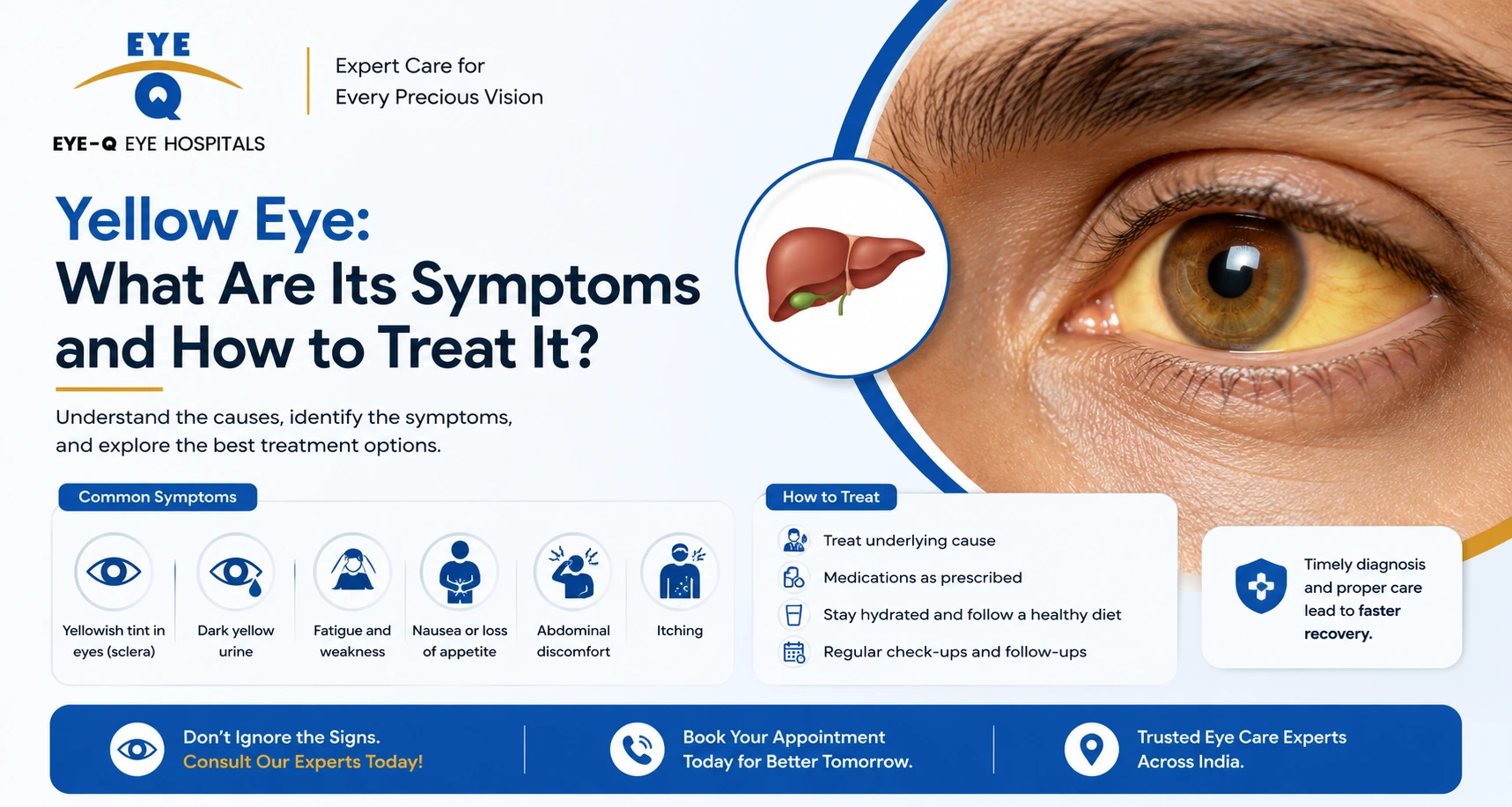
Yellow eyes usually mean the white part of the eye (sclera) has become yellowish. This can happen because of increased bilirubin and may be associated with jaundice, liver problems, bile duct or gallbladder conditions, blood disorders and other causes. Yellow eyes should not be ignored, especially when accompanied by dark urine, abdominal pain, fever, vomiting or yellow skin.
The Yellow Eye: What Does it Mean?
The term yellow eye refers to the yellowish discoloration of the sclera, which is the white part of your eye. In medical terms, the yellowing of the eye is referred to as scleral icterus or conjunctival icterus.
This condition is commonly associated with jaundice. However, jaundice itself is not a disease. It is, instead, a symptom of an abnormality in the body.
In such cases, the yellow color appears due to a buildup of a substance called bilirubin in the blood. Bilirubin is a yellow-colored pigment produced from the breakdown of red blood cells. In general, the liver processes this bilirubin and removes it from the body.
Any disruption in this process can cause the bilirubin to accumulate in the body. This, in turn, causes the skin and eyes to turn yellow.
At Eye-Q Eye Hospitals in Gurgaon, we offer expert counsel on yellow eye. Here, you can get world-class yellow eye treatment after proper diagnosis and consultation
Why Do the Eyes Turn Yellow First?
The sclera, which is the white portion of the eye, is particularly sensitive to bilirubin buildup. This is for the following reasons:
- It contains elastic tissue, which easily binds with bilirubin.
- It is naturally very white, making any color changes easy to spot.
Due to this, the yellowing of the eye is the first visible sign of jaundice in most cases. It appears long before any other symptoms.
Common Symptoms Associated with Yellow Eyes
Yellow eyes are themselves a symptom of an underlying health condition. However, in most cases, they are accompanied or soon followed by some other symptoms. The nature of the associated symptoms depends on the underlying cause. Some common symptoms are listed below.
Eye-related symptoms include:
- Yellowing of the white part of the eye
- Muddy or dull eye appearance
- Mild eye discomfort or dryness (in some cases)
Digestive and liver-related symptoms include:
- Abdominal pain, especially on the right side
- Bloating
- Skin itchiness without any visible rash
- Fever (in case of infection)
General bodily symptoms include:
- Yellowing of the skin
- Dark-colored urine
- Pale or clay-colored stools
- Fatigue or weakness
- Loss of appetite
- Nausea or vomiting
how to cure yellow eyes naturally
What Causes Yellow Eyes?
To get the proper yellow eye treatment in Gurgaon, it is necessary to determine the cause behind it. The most common potential causes for yellow eye are discussed in the following sections.
1.Liver Disorders
The liver plays a vital role in processing the bilirubin formed after the breakdown of red blood cells. Therefore, any disruption in liver function can lead to the accumulation of bilirubin, thus causing yellow eyes.
Common liver conditions that may contribute to it include:
- Hepatitis (viral, alcoholic, or drug-induced)
- Fatty liver disease
- Liver cirrhosis
- Liver infection or inflammation
- Gallbladder and Bile Duct Problems
The bile carries bilirubin from the liver to the gall bladder through the bile duct. If, however, the bile flow is blocked, bilirubin can build up in the body.
Such blockage can be caused by:
- Gallbladder stones or gallstones
- Bile duct obstruction
- Tumours affecting bile flow
2.Blood Disorders
Excess breakdown of red blood cells can increase bilirubin production in the body, causing pigment buildup. Hemolytic anemia is one such condition characterized by the abnormal breakdown of red blood cells in the body.
-
Pancreatic Conditions
Tumors or inflammation in the pancreas can put pressure on the bile duct. This may obstruct or block the bile flow, causing bilirubin buildup.
-
Medication or Toxin Exposure
Some medicines, herbal supplements, or toxins may damage the liver when taken in excess or incorrectly.
Yellow Eye Treatment at Eye-Q Eye Hospitals
At Eye-Q Eye Hospitals in Gurgaon, we curate a personalized yellow eye treatment plan based on the underlying cause. Our experts perform a thorough diagnosis through different means, including physical examination, blood tests, imaging, and other specialized tests. Based on their observations, they devise the best treatment approach to address the root cause, which in turn resolves the yellow eye. Some common yellow eye treatment approaches are discussed below.
1.Treating Liver Conditions
In case of an underlying liver condition, doctors would carry out a targeted treatment for the same. This may include:
- Adjusting medications that affect liver health
- Avoiding alcohol
- Lifestyle changes for fatty liver
- Antiviral medicines for hepatitis
2.Resolving Gallbladder or Bile Duct Issues
This encompasses either prescribing medications to dissolve gallstones or a surgical intervention. Our experts decide on the best approach based on the patient’s health status and medical history.
3.Treating Blood Disorders
If yellow eye is caused by blood disorders like haemolytic anaemia, the treatment is focused on resolving or managing the blood disorder. This may include:
- Medications
- Blood transfusion
- Surgery, including procedures like splenectomy, removal of the spleen
- Plasmapheresis, a process of removing antibodies from the blood
- Stem cell transplant (in severe cases)
In addition to the targeted treatment, supportive care is also necessary. This includes adequate hydration, following a healthy diet, taking proper rest, and regular monitoring. With time, as the bilirubin levels return to normal, the eyes eventually regain their natural white color.
Yellow Eyes? Not to be Ignored
Yellow eye is not a disease. It is, however, your body’s signal that something is amiss internally. Whether or not this condition is accompanied by other symptoms, it is necessary to seek medical advice to prevent any future complications.
With a timely diagnosis, proper treatment, and the necessary lifestyle adjustments, yellow eyes can be manageable and reversible. So if you, or anyone around you, has a yellowish tinge to their eyes, do not hesitate to seek a medical opinion.
At Eye-Q Eye Hospitals in Gurgaon, we offer patient-centred and personalized yellow eye treatment. With highly qualified and experienced professionals on the team and the assistance of cutting-edge technology, we ensure you get the best treatment alongside general comfort and cost-efficiency.
Frequently Asked Questions
Is it okay if my eyes are a little yellow?
No. Yellow eyes are usually a sign of an underlying issue associated with the liver, blood, or bile duct system. So if you notice a yellowish tinge in your eyes, it is best to seek medical care to address the cause at an early stage.
How to fix yellowing eyes?
Yellowing eyes usually indicate an underlying problem related to the liver, blood, or bile duct. Seeking expert consultation and treatment for the root cause is necessary to get rid of yellow eyes.
Do yellow eyes mean liver problems?
Yes, yellow eyes are largely associated with liver problems. However, they can sometimes be caused by blood disorders, like haemolytic anaemia, a blockage in the bile duct, or other causes.