



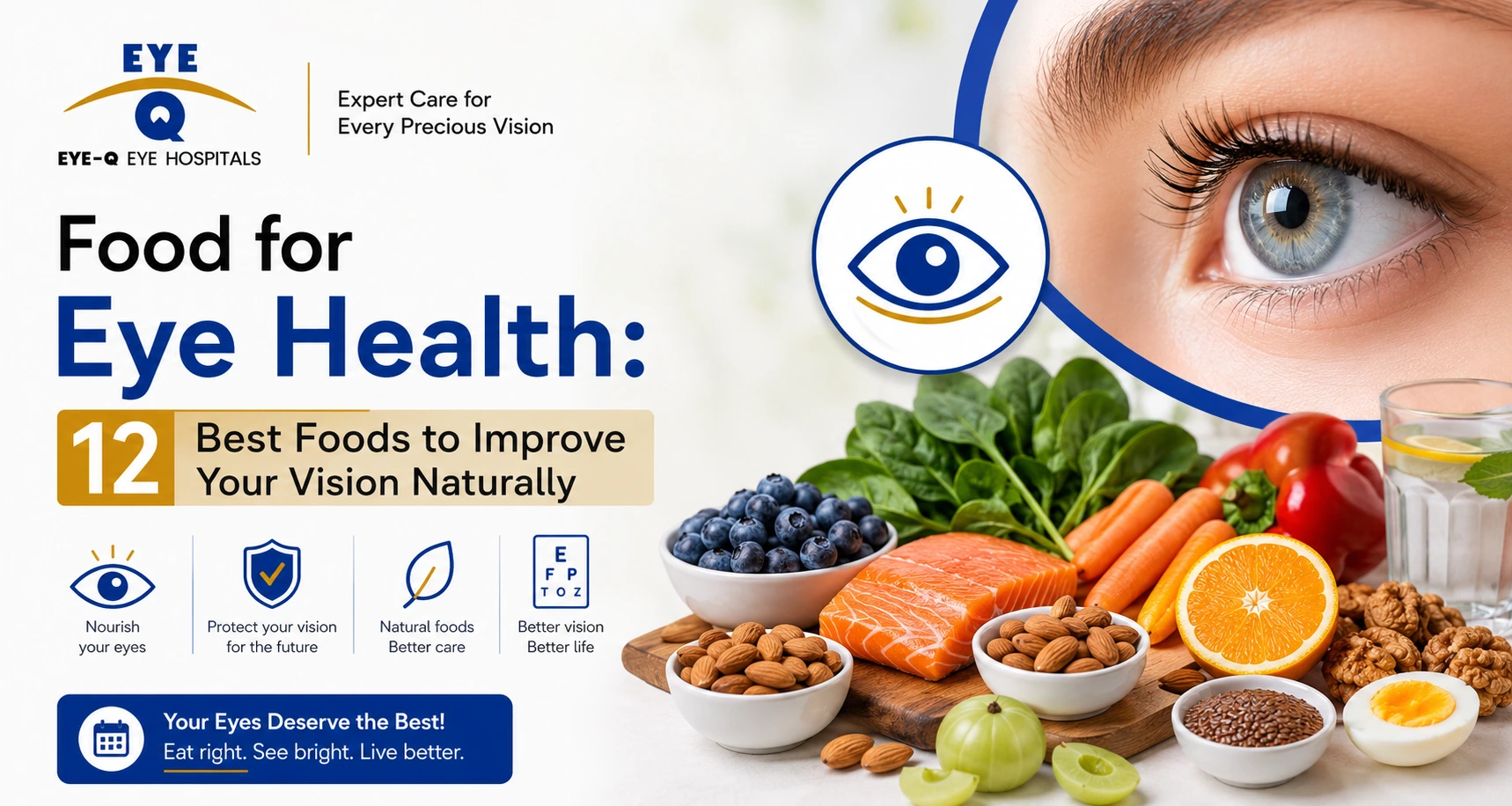
Quick Summary
The best food for eye health includes dark leafy greens, carrots, eggs, oily fish, citrus fruits, and nuts. These supply the six nutrients your eyes rely on most: lutein, zeaxanthin, vitamin A, vitamin C, vitamin E, zinc and omega-3 fatty acids.
Together these nutrients protect the retina and macula, filter harmful blue light, keep the eye’s surface moist, and lower the long-term risk of cataracts and age-related macular degeneration (AMD) — the two leading causes of vision loss in India.
Bottom line: No single food is a magic bullet. A colorful, varied plate every day does far more for your eyesight than any supplement.
We often hear “eat your carrots for good eyesight” — but the truth is far bigger than carrots. What you put on your plate every day quietly shapes how well your eyes work and how long they stay healthy. The right food for eye health can slow age-related decline, ease dry, tired eyes, and protect the delicate tissues that let you see the world in sharp, vibrant detail.
In this guide, our retina specialists at Eye-Q break down the 12 best foods for your eyes, the exact nutrients that make them work, simple vegetarian options for Indian kitchens, and the foods worth cutting back on. Let’s help you see clearly for years to come.
Read More : 8 Nutrient-Rich Foods for Eye Health: Improve Vision Naturally
Can Food Really Improve Eyesight?
Here’s the honest answer: food cannot change the power of your glasses or reverse a refractive error like myopia. If you need spectacles, no diet will make them disappear.
What food can do is just as important. The retina and macula are among the most metabolically active tissues in the body, and they take constant damage from light and oxygen. The right nutrients act as a defence system — neutralizing that damage, supporting the tear film, and keeping blood vessels healthy. Strong clinical evidence backs this up: large studies funded by the US National Institutes of Health found that a specific blend of antioxidants and zinc can meaningfully slow the progression of intermediate macular degeneration to its advanced, sight-threatening stage.
So food won’t give you “20/20 from 6/12” — but it is one of the few levers you fully control to protect the vision you have.
The 6 Nutrients Your Eyes Need Most
Before the food list, it helps to know why each food matters. Almost every eye-friendly food earns its place through one of these six nutrients:
| Nutrient | What it does for your eyes | Best food sources |
|---|---|---|
| Lutein & Zeaxanthin | Concentrate in the macula and filter harmful blue light; linked to lower cataract & AMD risk | Spinach, kale, egg yolk, corn |
| Vitamin A / Beta-carotene | Essential for night vision; keeps the cornea moist and clear | Carrots, sweet potato, pumpkin |
| Vitamin C | Antioxidant that supports eye blood vessels and may lower cataract risk | Amla, oranges, bell peppers, guava |
| Vitamin E | Protects eye cells from oxidative “rusting” | Almonds, sunflower seeds, peanuts |
| Zinc | Carries vitamin A to the retina; supports night vision | Pumpkin seeds, beans, chickpeas, dairy |
| Omega-3 (DHA/EPA) | Builds the retina and supports the tear film; eases dry eyes | Salmon, sardines, walnuts, flaxseed |
1. Leafy Greens — The Single Best Food for Your Eyes
Lutein · Zeaxanthin · Vitamin C
If you do just one thing for your eyes, eat more dark leafy greens. Spinach, kale, methi (fenugreek), and amaranth are the richest dietary sources of lutein and zeaxanthin — the only two carotenoids that physically gather in the macula, where they act like internal sunglasses against blue light and oxidative stress.
How to eat it: A bowl of palak, sarson ka saag, or a handful of spinach in your dal or smoothie. Pair greens with a little fat (ghee, olive oil) — these nutrients are fat-soluble and absorb far better that way.
2. Carrots — Classic for a Reason
Beta-carotene · Vitamin A
Carrots earned their reputation honestly. They’re loaded with beta-carotene, which your body converts into vitamin A — the nutrient that powers rhodopsin, the pigment your eyes use to see in low light. A genuine vitamin A deficiency causes night blindness and dry eyes, and remains a real problem in parts of India.
The myth, busted: Carrots keep healthy eyes healthy, but eating a kilo of them won’t give you super-sight or remove the need for glasses.
3. Eggs — A Complete Eye-Health Package
Lutein · Zeaxanthin · Zinc · Vitamin A
The humble egg yolk delivers lutein and zeaxanthin in a form your body absorbs especially well, plus zinc and vitamin A. Eating eggs regularly is one of the easiest ways to raise the protective pigment density in your macula.
4. Oily Fish — For the Retina & Dry Eyes
Omega-3 (DHA & EPA)
Salmon, sardines (tarli), mackerel (bangda), and rohu are rich in omega-3 fatty acids. DHA is a major structural building block of the retina, while both DHA and EPA calm inflammation and support a stable tear film — which is why omega-3 is so often recommended for dry eye relief.
5. Citrus Fruits & Amla — A Vitamin C Burst
Vitamin C
Oranges, sweet lime (mosambi), lemon, guava and especially amla (Indian gooseberry) are vitamin-C powerhouses. This antioxidant supports the tiny blood vessels that feed your eyes and is associated with a lower risk of cataracts. Amla in particular packs more vitamin C per gram than almost any common fruit.
Also Read : Nutrient-rich foods for eye health
6. Nuts & Seeds — Pocket-Sized Protection
Vitamin E · Omega-3 · Zinc
Almonds and sunflower seeds are excellent sources of vitamin E, which shields eye cells from free-radical damage. Walnuts and flaxseed add plant-based omega-3, and pumpkin seeds are one of the best vegetarian sources of zinc. A small daily handful is all you need.
7. Sweet Potato & Pumpkin
Beta-carotene · Vitamin A
That deep orange colour signals high beta-carotene. Like carrots, sweet potato and pumpkin keep the cornea healthy and support night vision — and they’re comforting, versatile, and easy to add to everyday meals.
8. Bell Peppers
Vitamin C · Vitamin A
Brightly coloured capsicums are one of the richest vegetable sources of vitamin C, plus a useful dose of vitamin A. Eat them raw or lightly cooked to preserve the most vitamin C.
9. Beans, Lentils & Chickpeas
Zinc · Plant protein · Bioflavonoids
Rajma, chana, and dal are everyday Indian staples that quietly deliver zinc — vital for shuttling vitamin A to the retina. For most vegetarians, legumes are the dependable, affordable backbone of eye-friendly eating.
10. Berries & Dark Fruits
Anthocyanins · Vitamin C
Blueberries, jamun, and black grapes are rich in anthocyanins — antioxidants that support healthy blood flow to the retina and help the body manage oxidative stress.
11. Dairy & Fortified Milk
Vitamin A · Zinc · Riboflavin
Milk, curd and paneer supply vitamin A and zinc together in a readily absorbed form, making dairy a simple eye-friendly choice — especially for children and vegetarians.
12. Water & Eye-Friendly Drinks
Hydration · Antioxidants
Often overlooked: hydration. Your tear film is mostly water, and even mild dehydration can leave eyes gritty and tired. Beyond plain water, carrot juice and fresh orange juice add beta-carotene and vitamin C, while green tea provides protective antioxidants. (Skip the added sugar)
What about a “food for eye health vegetarian” plan? You don’t need fish at all. Build your omega-3 from walnuts, flaxseed and chia; your lutein from spinach, methi and corn; your zinc from pumpkin seeds, beans and dairy; and your vitamins A, C and E from carrots, amla, citrus and almonds. A well-planned vegetarian plate covers every eye nutrient.
Best Vegetarian Foods for Eyesight, at a Glance
- For lutein & zeaxanthin: spinach, kale, methi, corn, egg yolk
- For vitamin A: carrots, sweet potato, pumpkin, mango, milk
- For vitamin C: amla, oranges, guava, bell peppers, lemon
- For vitamin E: almonds, sunflower seeds, peanuts
- For zinc: pumpkin seeds, chickpeas, rajma, paneer
- For omega-3: walnuts, flaxseed, chia seeds
Read More : Nourishing Your Vision: 7 Nutrient-Rich Dry Fruits for Healthy Eyes
Foods to Avoid for Healthy Eyes
What you cut back on matters as much as what you add. These foods promote inflammation and oxidative stress, and over time are linked to a higher risk of diabetic eye disease and macular degeneration:
- Deep-fried & trans-fat foods — samosas, chips, vanaspati-based snacks
- Sugary drinks & sweets — spikes in blood sugar damage retinal blood vessels over time
- Refined carbohydrates — white bread, maida, sugary cereals
- Excess salt — high intake is linked to higher cataract risk
- Excess alcohol — depletes protective antioxidants
A Simple Day of Eating for Your Eyes
| Meal | Eye-healthy choice | Key nutrients |
|---|---|---|
| Breakfast | Vegetable poha with peanuts + an orange, or 2 eggs | Lutein, vitamin C, zinc |
| Lunch | Palak dal, brown rice, curd, carrot salad | Lutein, vitamin A, zinc |
| Snack | A handful of almonds + walnuts | Vitamin E, omega-3 |
| Dinner | Fish or rajma curry, sautéed bell peppers, roti | Omega-3, vitamin C, zinc |
Beyond Diet: Habits That Protect Your Vision
- Follow the 20-20-20 rule: every 20 minutes of screen time, look 20 feet away for 20 seconds.
- Wear UV-protective sunglasses outdoors — sunlight damage adds up over years.
- Don’t smoke. Smoking is one of the strongest controllable risk factors for AMD and cataracts.
- Control blood sugar and blood pressure to protect your retina.
- Get a yearly comprehensive eye exam — most sight-threatening diseases are silent in early stages.
Key Takeaways
- The best food for eye health centres on leafy greens, carrots, eggs, oily fish, citrus, and nuts.
- Six nutrients do the heavy lifting: lutein, zeaxanthin, vitamins A, C and E, zinc, and omega-3.
- Food protects the vision you have and slows age-related decline — it won’t replace glasses or surgery.
- A varied, colourful plate beats any single “superfood” or supplement.
- Cut deep-fried foods, sugar and refined carbs; stay hydrated; and get a yearly eye exam.
Frequently Asked Questions
What foods improve eyesight naturally?
Leafy greens (spinach, kale), carrots, eggs, oily fish like salmon, citrus fruits and amla, nuts and seeds, and orange vegetables improve eyesight naturally. They supply lutein, zeaxanthin, vitamin A, vitamin C, vitamin E, zinc and omega-3 — nutrients that protect the retina and macula and lower the risk of cataracts and macular degeneration.
Which food is best for eyes?
Dark leafy greens such as spinach and kale top the list because they are the richest dietary source of lutein and zeaxanthin, the two antioxidants that gather in the macula and filter harmful blue light. For the best results, eat them with a little healthy fat.
What drink is good for eyesight?
Carrot juice and fresh orange juice supply beta-carotene and vitamin C; green tea adds protective antioxidants; and plain water keeps your tear film healthy and prevents dry eyes. Choose unsweetened versions to avoid added sugar.
What foods should I avoid for eye health?
Limit deep-fried and trans-fat foods, sugary drinks and sweets, refined carbohydrates like maida, excess salt, and too much alcohol. These promote inflammation and oxidative stress and are linked to a higher risk of diabetic eye disease and macular degeneration.
How can I improve my eye health?
Eat a colourful, balanced diet rich in greens, fish and vitamin-C fruits; follow the 20-20-20 rule for screens; wear UV-protective sunglasses; stay hydrated; don’t smoke; control blood sugar and blood pressure; and get a comprehensive eye examination at least once a year.
Can the right diet reverse poor eyesight or remove the need for glasses?
No. Diet cannot correct refractive errors like myopia or hyperopia — those need glasses, contact lenses, or procedures such as LASIK or ICL. What a good diet does is protect your eyes from long-term damage and slow age-related conditions, which is just as valuable.
Medical Disclaimer
This article is for general information only and is not a substitute for professional medical advice, diagnosis, or treatment. Nutritional needs vary by individual and health condition. Always consult a qualified ophthalmologist or doctor before making major dietary changes or starting supplements, especially if you have diabetes, an existing eye condition, or take regular medication.