


QUICK ANSWER
A swollen eyelid can happen because of a stye, chalazion, allergy, infection, injury or fluid retention. If you’re curious about treating a swollen eye lid quickly at home, well, that all depends on the cause. Warm compresses may help styes and chalazia, while cold compresses can reduce allergy-related swelling and puffiness.
In this guide, learn what causes a swollen eyelid, how to treat it at home, when swelling may be serious, and when you should see an eye doctor.
What Is a Swollen Eyelid?
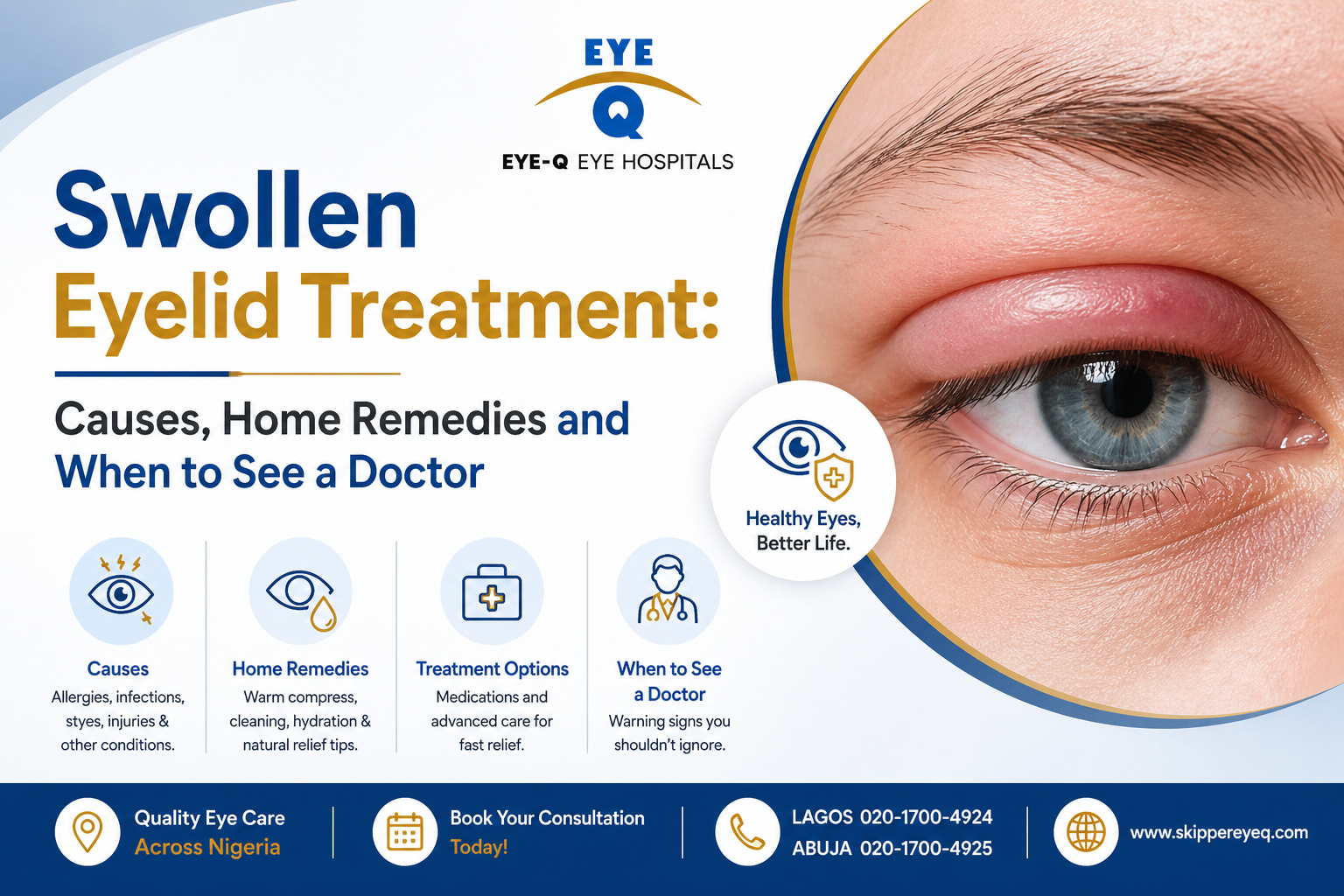
Imagine waking up and one of your eyelids looks like a little balloon. That is a swollen eyelid. Doctors call it eyelid oedema or periorbital swelling. It simply means there is extra fluid or inflammation in the tissues of your eyelid, making it look puffier than normal.
The swelling can happen in your upper eyelid, your lower eyelid, or both. It can affect one eye or both eyes at the same time. It can come on suddenly (within minutes, like an allergic reaction) or gradually over a few hours or days.
The good news: Most swollen eyelids are not dangerous and get better in a day or two with simple home care. But some causes do need a doctor and knowing the difference could protect your eyesight.
If your swollen eyelid has been bothering you, book an eye check at EyeQ India and get a proper diagnosis.
What Causes a Swollen Eyelid? 10 Common Causes Explained
The most important thing to understand is this: the right treatment depends on the right cause. Using the wrong treatment can actually make things worse. Here are all the main causes, what they look like, and what to do:
| Cause | What Is It? | Key Signs | What to Do |
| Stye (Hordeolum) | A red, painful bump near the eyelash root. Caused by a blocked oil gland getting infected. | One eyelid, near lash line. Painful lump. Feels like a pimple. | Warm compress 4-5x/day. Do NOT squeeze. See doctor if no improvement in 1 week. |
| Chalazion | A painless lump deeper in the eyelid. Caused by a blocked meibomian (oil) gland. | One eyelid, deeper bump. Usually painless. May feel like a marble under the skin. | Warm compress. Usually clears in 4-6 weeks. Doctor may drain it if it persists. |
| Allergic Reaction | Eye reacts to pollen, pet hair, dust, eye drops, makeup, or insect bite. | Both eyelids usually. Itchy. Watery. Comes on quickly. | Antihistamine tablets or eye drops. Cold compress. Remove allergen source. |
| Pink Eye (Conjunctivitis) | Viral or bacterial infection of the white of the eye. | Red eyes. Yellow or green discharge. Often spreads to both eyes. Can be contagious. | Viral: clean with warm water, resolves in 1-2 weeks. Bacterial: antibiotic eye drops. |
| Blepharitis | Inflammation of the eyelid margin due to bacteria or blocked oil glands. | Both eyelids. Crusty lashes on waking. Burning/gritty feeling. Dandruff on lashes. | Warm compress + gentle eyelid scrub daily. Antibiotic drops or ointment if infected. |
| Cellulitis (Eye Skin Infection) | Bacterial infection of the skin around the eye. Can spread rapidly. | One eye. Skin is hot, red, hard to touch. May have fever. | Antibiotics (prescription). URGENT medical attention needed. Can be dangerous. |
| Insect Bite | Mosquito, bee, or other insect bite near the eye. | Sudden swelling. Usually one eye. Itchy or stinging. No pain inside the eye. | Cold compress. Antihistamine. Monitor. See doctor if swelling worsens or spreads. |
| Eye Injury or Trauma | A bump, hit, or scratch to the eye or eyelid area. | One eye. May have bruising (black eye). Recent injury history. | Cold compress for first 24 hrs. See doctor immediately if vision changes or eye hurts. |
| Fluid Retention / Tiredness | Too much salt, lack of sleep, crying, or lying flat all night. | Both eyelids. No pain. Comes and goes. Worse in the morning. | Cold compress. Head elevated while sleeping. Reduce salt. Rest. |
| Thyroid Eye Disease (Graves) | Overactive thyroid affecting eye muscles and tissues. | Both eyes often. Bulging appearance. Not just the eyelid. | Needs specialist care. See doctor urgently. |
Quick tip: If the swelling is in one eye and it is painful with a visible lump, it is probably a stye or chalazion. If both eyes are itchy and watery, it is likely an allergic reaction.
One Eye Swollen vs Both Eyes Swollen: What Does It Mean?
This is one of the most searched questions about swollen eyelids – and for good reason. Whether the swelling affects one eye or both is one of the biggest clues about the cause:
| Condition | Which Eye | Eyelid Affected | Key Clue |
| Stye | One eye | Usually one, near lash root | Painful bump |
| Chalazion | One eye | One, deeper in lid | Painless lump |
| Bacterial conjunctivitis | Starts in one, spreads | Both usually | Yellow/green discharge |
| Viral conjunctivitis | Both | Both | Watery, clear discharge |
| Allergic reaction | Both | Both always | Itchy, watery, comes quickly |
| Blepharitis | Both | Both | Crusty lashes, burning |
| Cellulitis | One eye | One, skin is hot/red | Urgent – needs doctor |
| Injury / black eye | One eye | One only | After trauma |
| Fluid retention / tiredness | Both | Both | Worse in morning |
| Thyroid eye disease | Both | Both, bulging appearance | Refer to specialist |
Bottom line: One swollen eye usually means a local problem (stye, insect bite, infection, injury). Both swollen eyes together usually means a whole-body reaction (allergy, fluid retention, viral infection).
How to Treat a Swollen Eyelid Fast at Home
The number one most important thing: find out what is causing the swelling first. But while you are figuring that out, these safe home steps work for most mild swollen eyelids:
Step 1: Do NOT rub your eye
It feels tempting, especially if it is itchy. But rubbing makes swelling worse, can spread infection, and can damage the delicate surface of the eye. Use a clean tissue if you must touch the area.
Step 2: Remove contact lenses
If you wear contact lenses, take them out immediately. A contact lens sitting on an already irritated eye is like trying to walk with a stone in your shoe. It makes everything worse and can trap bacteria.
Step 3: Warm compress or cold compress?
This is where most people get confused. Here is the clear answer:
| Type | Best For | Why It Works | How to Do It |
|---|---|---|---|
| Use Warm Compress | Stye, chalazion, blepharitis, blocked gland | Warmth melts the thick oily blockage, helps it drain naturally | Soak a clean cloth in warm (not boiling) water. Wring out. Hold over closed eye for 10 mins. Repeat 3–5x/day. |
| Use Cold Compress | Allergies, insect bite, injury, puffiness from crying or sleep | Cold narrows blood vessels, reduces swelling and itching quickly | Wrap ice or frozen peas in a clean cloth. Hold over closed eye for 10–15 mins. Never put ice directly on skin. |
Simple rule: If you have a lump (stye or chalazion) use warm. If you have puffiness, an itch, or it happened after a bump or bite, use cold.
Step 4: Keep the area clean
Gently clean the eyelid and lash area with a clean, damp cloth or cotton pad once or twice a day. If there is crusty discharge (especially in the morning), soak it off carefully with warm water before wiping.
Step 5: Elevate your head at night
If your eyelids are puffy in the mornings, try sleeping with an extra pillow. When your head is slightly elevated, fluid does not pool in your face as you sleep.
Still not improving after 2-3 days? See an eye specialist at EyeQ India for a proper diagnosis and treatment.
Swollen Eyelid Home Remedies: What Works and What Does Not
The internet is full of home remedies for swollen eyes. Here is an honest guide to which ones actually work, which ones are okay, and which ones you should skip:
| Remedy | Best For | Effectiveness | How to Use | Why It Helps |
| Warm compress | Stye, chalazion, blepharitis | High | Soak cloth in warm water. Apply for 10 min, 3–5x daily. | Helps blocked glands drain. The most effective remedy. |
| Cold compress / ice pack | Allergy, injury, insect bite, puffiness | High | Wrap in clean cloth. Apply for 10–15 min. | Reduces swelling and itching fast. Never use directly on skin. |
| Chilled black tea bags | Allergy puffiness, tired eyes | Moderate | Brew, cool in fridge, place over eyes for 10 min. | Caffeine and tannins in tea constrict blood vessels and reduce puffiness. |
| Saline (sterile) rinse | Pink eye, allergic discharge | Moderate | Use sterile saline drops or rinse. Do not use homemade salt water on eyes. | Cleans discharge and reduces irritation. |
| Elevating head while sleeping | Morning puffiness, fluid retention | Moderate | Add an extra pillow under your head at bedtime. | Prevents fluid from settling in the face overnight. |
| Cucumber slices | Mild puffiness, tired eyes | Low–Moderate | Chill in fridge. Place over closed eyes for 10-15 min. | Cooling effect reduces puffiness. No antibiotic or anti-inflammatory effect. |
| Aloe vera gel (external use) | Minor skin irritation around the eye | Low–Moderate | Apply to eyelid skin only. Keep away from the eye itself. | Anti-inflammatory for the skin. Do NOT put inside the eye. |
What to AVOID: Raw meat on the eye (risk of bacterial infection), toothpaste (severe irritant), lemon juice (will burn), essential oils directly in the eye, squeezing or popping styes, old or expired eye drops.
Medicines for Swollen Eyelid: A Simple Guide
Medicines for a swollen eyelid depend entirely on the cause. Here is a simple guide to what exists, when it is used, and which ones need a prescription:
| Medicine Type | OTC/Rx | Used For | Examples | Dosage | Note |
| Antibiotic Eye Drops | Prescription | Bacterial conjunctivitis, stye with infection, blepharitis | Ciprofloxacin, Moxifloxacin (Vigamox), Tobramycin | 1 drop 2–3x/day for 5–7 days as prescribed | Do not share eye drops. Complete the full course. |
| Antibiotic Eye Ointment | Prescription | Blepharitis, eyelid infections, severe pink eye | Erythromycin, Tetracycline | Apply small amount to eyelid margin at bedtime | May blur vision for a few minutes. Use at night if possible. |
| Antihistamine Eye Drops | OTC / Prescription | Allergic conjunctivitis, swollen eyelid from allergy | Olopatadine (Patanol), Azelastine, Ketotifen | 1–2 drops 1–2x/day | Do not use while wearing contact lenses. |
| Oral Antihistamines | OTC | Allergic swelling, insect bite reaction | Cetirizine, Loratadine, Fexofenadine | Once daily as per pack | Cetirizine safe for children 2+. Avoid driving if drowsy. |
| Steroid Eye Drops | Prescription only | Severe allergic reaction, post-surgical swelling | Prednisolone, Dexamethasone | As prescribed by doctor | Never use without a prescription. Can raise eye pressure. |
| Lubricating Eye Drops (Artificial Tears) | OTC | Dry eye related swelling, blepharitis relief | Sodium Hyaluronate, Carboxymethylcellulose | As needed throughout the day | Safe for daily use. Preservative-free options available. |
| Oral Antibiotics | Prescription | Orbital/periorbital cellulitis, severe stye | Doxycycline, Azithromycin | Course as prescribed | Used when infection has spread beyond the eye surface. |
Important: Never use steroid eye drops without a prescription. They can dangerously raise the pressure inside your eye and cause permanent damage if used incorrectly.
Get the right prescription for your swollen eyelid from EyeQ India’s eye specialists – available across Gujarat, Haryana, UP and Uttarakhand.
How to Treat a Stye in the Eye – Step by Step
A stye (hordeolum) is the most common reason for a swollen eyelid. It is a small, painful red bump that forms at the edge of the eyelid, usually right near the eyelashes. It looks and feels a bit like a spot or pimple on your eyelid. It happens when a tiny oil gland or hair follicle in the eyelid gets blocked and then gets infected by bacteria.
Here is exactly what to do:
- Soak a clean flannel or cotton pad in warm water (warm, not boiling – test on your wrist first).
- Hold it gently against your closed eyelid for 10 minutes.
- Do this 3 to 5 times every day.
- After the compress, gently clean the eyelid margin with a cotton pad.
- DO NOT squeeze or pop the stye – this can spread the infection.
- Avoid wearing eye makeup or contact lenses until the stye has completely gone.
- If the stye has not improved after 7-10 days, see an eye doctor.
How long does a stye last? Most styes drain and heal on their own within 7-14 days with warm compresses. Occasionally a doctor needs to make a tiny cut to drain it if it is not resolving.
Learn about eyelid conditions at EyeQ India – General Eye Care
Swollen Eyelid in Toddlers and Children: What Parents Should Know
Swollen eyelids are quite common in young children. A toddler’s skin is thinner and more sensitive than an adult’s, so even a small mosquito bite can cause dramatic-looking puffiness around the eye. Here is what parents need to know:
| Cause in Child/Toddler | What to Do | Parent Tip |
| Stye | Warm compress (not too hot). Never squeeze. Doctor if no improvement in 5 days. | Do not squeeze or pop. Keep child from rubbing eye. |
| Allergic swelling | Children’s antihistamine syrup (e.g. cetirizine, age 2+). Cold compress. | Identify and remove the trigger. Check if it is a reaction to a new food, pet, or product. |
| Bacterial pink eye | Antibiotic eye drops prescribed by paediatrician. Clean with warm water. | Keep child home from school until discharge clears. Wash hands often. |
| Insect bite | Cold compress. Children’s oral antihistamine. Monitor for 24 hours. | Seek urgent care if breathing changes, rash spreads, or swelling gets much worse (anaphylaxis). |
| Blepharitis | Gentle warm compress. Doctor will prescribe antibiotic ointment if needed. | Do not rub or scratch. Regular eyelid hygiene from early age helps prevent recurrence. |
| Swelling from crying | Cold compress. Elevate head at bedtime. | Normal – resolves within a few hours. |
Red flags in children – go to A&E immediately if: the swelling is spreading fast (especially below the cheekbone), your child has a fever above 38C, the eye is being pushed forward, your child cannot open the eye fully, or is very unwell.
Can a newborn baby have a swollen eyelid? Yes. Swollen or sticky eyes in newborns within the first few days of life can be caused by a blocked tear duct or neonatal conjunctivitis. Always see a doctor for newborn eye symptoms.
For children’s eye care, book a paediatric eye consultation at EyeQ India
When to See a Doctor for a Swollen Eyelid
Most swollen eyelids do not need emergency care. But some do. Here is how to tell the difference:
Go to the doctor within 1-2 days if:
- The swelling has not improved at all after 48 hours of home care.
- There is yellow or green discharge from the eye (suggests bacterial infection needing antibiotic drops).
- The stye or chalazion is not improving after 7-10 days of warm compresses.
- Both eyes are very red, swollen, and producing discharge.
- Swollen eyelid in a toddler that is not due to an obvious cause like crying or an insect bite.
Go to A&E or seek emergency care immediately if:
- Your vision has changed, blurred, or become double.
- You cannot move your eye normally in all directions.
- The skin around the eye is hot, hard, and red with a spreading rash – this may be orbital cellulitis, which is a medical emergency.
- You have a high fever along with the swollen eye.
- The eyelid swelling happened after a significant injury to the eye or head.
- The eyeball itself appears to be pushed forward.
- The swelling is very severe and came on within minutes (could be a severe allergic reaction / anaphylaxis).
Remember: Orbital cellulitis (a deep infection behind the eye) can threaten your vision and even your life if untreated. When in doubt, get checked.
EyeQ India offers urgent eye consultations across 30+ locations. Book an urgent appointment
How Long Will Swollen Eyelid Swelling Last?
How quickly the swelling goes down depends entirely on what is causing it:
- Allergic reaction: Improves within hours after removing the trigger or taking an antihistamine.
- Insect bite: Typically reduces within 24-48 hours.
- Puffiness from sleep or crying: Usually gone within a few hours.
- Pink eye (conjunctivitis): Bacterial – 5-7 days with antibiotic drops. Viral – 1-2 weeks.
- Stye: 7-14 days with warm compresses. Some take up to 3-4 weeks.
- Chalazion: 4-6 weeks on average. Some persist for months and need draining.
- Blepharitis: Improves with daily treatment, but can recur – it is a chronic condition.
- Cellulitis: Improves within a few days on antibiotics, but needs completion of the full course.
Important: If the swelling has not started improving after 48-72 hours of home treatment, see a doctor. Do not wait longer than a week.
Key Takeaways
-
- Most swollen eyelids are mild and improve within 24-48 hours with simple home care.
- Stye = warm compress (3-5x/day). Allergy = cold compress + antihistamine. Pink eye = antibiotic drops (if bacterial).
- One eye swollen = local problem (stye, bite, infection). Both eyes swollen = allergy or whole-body reaction.
- Never squeeze a stye and never rub a swollen eye.
- Medicines: only use steroid eye drops with a prescription. Complete antibiotic courses fully.
- For toddlers: warm compress + keep them from rubbing. See a doctor within 5 days if not improving.
- Emergency signs: vision change, cannot move eye, hot spreading skin redness, fever, or severe sudden swelling – go to A&E.
Not sure what is causing your swollen eyelid? Book an eye check at EyeQ India – expert eye care across 30+ locations in India.
Frequently Asked Questions
How do you treat a swollen eyelid?
For most mild causes: apply a warm compress (for styes, chalazion, blepharitis) or cold compress (for allergies, bites, puffiness) 3-5 times daily, do not rub the eye, remove contact lenses, and rest with head elevated. See a doctor if it does not improve within 2-3 days or if vision changes.
What does it mean if only one eyelid is swollen?
One swollen eyelid usually points to a local cause – most commonly a stye, chalazion, insect bite, or eye infection affecting just that eye. Both eyelids swelling together more often suggests an allergic reaction, viral infection, or fluid retention affecting the whole face.
How to treat a stye in the eye for a toddler?
Apply a warm (not hot) compress for 10 minutes, 3-4 times a day. Never squeeze. Keep the child from rubbing the eye. If it is not improving within 5-7 days or the child seems unwell with fever, see a paediatrician or eye specialist for antibiotic ointment.
How long will eyelid swelling last?
Puffiness from crying or sleep clears in a few hours. Allergic swelling improves in hours with antihistamines. A stye takes 7-14 days. Bacterial pink eye resolves in 5-7 days with antibiotic drops. A chalazion can take 4-6 weeks. Swelling that is not improving after 72 hours needs a doctor.
What medicine is good for a swollen eyelid?
It depends on the cause. Bacterial infections need antibiotic eye drops (prescription). Allergic swelling responds to antihistamine tablets or eye drops (available over the counter). Styes need warm compresses and sometimes antibiotic ointment. Never use steroid eye drops without a doctor’s prescription.
Is heat or cold better for a swollen eyelid?
Warm compress works best for styes, chalazion, and blepharitis – it helps melt blocked oil gland material and promotes natural drainage. Cold compress works best for allergic reactions, insect bites, and injury-related puffiness – it narrows blood vessels and reduces swelling quickly.
Can a swollen eyelid be serious?
Most swollen eyelids are not serious. However, orbital cellulitis (a skin infection spreading behind the eye) is a medical emergency. Seek urgent care if the swelling is severe, the skin feels hard and hot, you have fever, vision changes, or cannot move your eye normally.
Can a swollen eyelid go away on its own?
Yes, many cases do – especially puffiness from crying, fluid retention, or a mild allergic reaction. A stye often drains naturally within 1-2 weeks. However, a chalazion, blepharitis, or bacterial infection usually does not fully clear without proper treatment. Never ignore swelling that is getting worse.
Medical Disclaimer
This article is for informational purposes only. It does not replace professional medical advice. If you are concerned about your swollen eyelid, please consult a qualified ophthalmologist.