


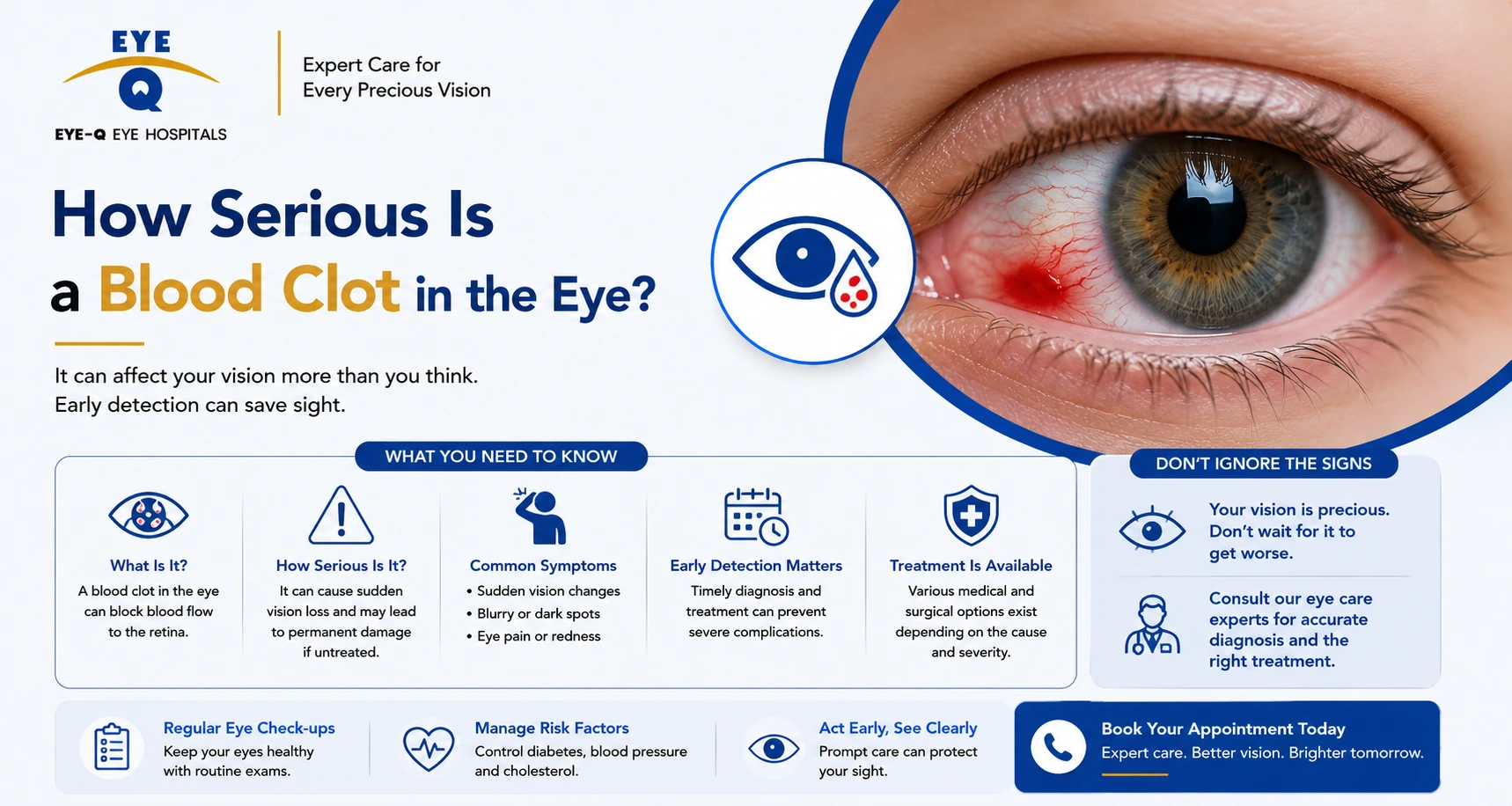
There’s a significant reason to be concerned about a blood clot in the eye. Since vision is one of our most important senses, any threat to it naturally causes us to get concerned. Some types of ocular blood clots can be medical emergencies that need to be diagnosed and treated right away, even though not all of them result in irreversible vision loss. Long-term eye health protection requires knowledge of the causes, symptoms, and treatment of blood clots in the eye.
In this below article let us know more about Eye clots, its causes, line of treatment and how serious they can be.
A Blood Clot in the Eye: What Is It?
A blockage in the retinal blood vessels, which provide oxygen and nourishment to the retina; the light-sensitive layer at the back of the eye is typically referred to as a blood clot in the eye. When blood flow is obstructed, retinal cells may not receive enough oxygen, leading to visual disturbances or damage.
In terms of medicine, this disorder is frequently categorized as retinal vascular occlusions, which encompass both arterial and venous obstructions. Which vessel is impacted, the extent of the obstruction, and the timing of treatment all affect how severe it is.
Blood Clot Types in the Eye
1. Occlusion of the retinal veins (RVO)
The most prevalent kind of blood clot in the eyes is this one. It happens when a vein that drains blood from the retina gets clogged. The primary retinal vein is affected by central retinal vein occlusion (CRVO), which can result in abrupt, painless visual loss.
Smaller veins are affected by branch retinal vein occlusion (BRVO), which typically results in partial blindness. Systemic diseases like diabetes, high blood pressure, and high cholesterol are frequently associated with RVOs.
2. Occlusion of the Retinal Arteries (RAO)
This is regarded as a real medical emergency and is more serious. Often referred to as a “stroke of the eye,” central retinal artery occlusion (CRAO) can result in abrupt, profound visual loss.
A smaller artery is affected by branch retinal artery occlusion (BRAO), which can cause partial blindness. Emboli, or clots, that originate in the heart or carotid arteries are typically the source of arterial occlusions.
How Harmful Is an Eye Blood Clot?
A number of factors determine how dangerous it is:-
- Type of Blocked Vessel: Since arteries provide blood that is rich in oxygen, arterial clots are typically more dangerous than venous clots. Venous clots may reduce immediate harm by permitting some collateral circulation.
- Speed of Treatment: The sensitivity of retinal tissue to oxygen deprivation is high. Delayed treatment increases the risk of permanent vision loss.
- Underlying Medical Conditions: Complications are more likely to occur in patients with uncontrolled diabetes, hypertension, heart disease, or clotting abnormalities. Vision may partially recover in some situations. In others, the harm may be irreversible, particularly if it affects the macula, or center vision region.
Typical Symptoms to Look Out for
Since an eye blood clot typically causes little pain, diagnosis may be delayed. Symptoms could consist of:-
- Abrupt distorted or blurred vision
- One eye’s partial or total loss of vision
- Shadows are dark areas in the field of vision
- A sudden loss of visual acuity
Any abrupt change in eyesight needs to be handled like a serious medical emergency.
Why Do Blood Clots Form in the Eye?
A number of local and systemic factors raise risk:-
- Elevated blood pressure
- Diabetes mellitus
- Elevated cholesterol
- Smoking
- Being overweight
- Heart-related conditions
- Disorders of blood coagulation
- Glaucoma
In younger patients, hereditary clotting problems or autoimmune diseases may be involved.
Diagnose: How Can It Be Found?
Doctors frequently advise systemic assessment, which includes blood tests, heart evaluation, and carotid artery imaging, because eye clots can indicate more extensive vascular illness. An eye specialist could make use of:-
- Examination of the dilated eye
- Photography of the fundus
- OCT, or optical coherence tomography
- Angiograms with fluorescein
Options for Treatment
The goal of treatment is to reduce harm and avoid problems rather than to “remove” the clot entirely.
For Occlusion of Retinal Veins
- Injections of anti-VEGF to lessen edema
- Injections of steroids to reduce inflammation
- In certain situations, laser therapy
- Tight regulation of cholesterol, blood pressure, and sugar
Regarding Occlusion of Retinal Arteries
- Emergency blood flow restoration techniques (poor efficacy)
- Assessment of stroke risk
- Managing cardiovascular risk factors over the long term
Results can be greatly impacted by early intervention, particularly in cases of venous occlusions.
Is It Possible to Restore Vision?
It is possible to recover partially, especially in BRVO. Stabilization is possible in CRVO and CRAO, although full vision return is uncommon. Long-term issues could consist of:
- Macular edema that persists
- Glaucoma that is neovascular
- Recurrent loss of vision
- Follow-ups on a regular basis are crucial.
Is an Eye Blood Clot a Warning Sign?
Yes, rather frequently. The following are some early indicators of systemic vascular disease that a retinal blood clot may indicate:-
- Risk of stroke
- Heart conditions
- Uncontrolled diabetes or high blood pressure
After an eye clot is found, many individuals receive a diagnosis of underlying diseases.
Preventive measures and risk mitigation
To reduce your risk, you can:-
- Keeping blood sugar and blood pressure within normal ranges
- Giving up smoking
- Regularly working out
- Controlling cholesterol levels
- Having regular eye exams, particularly if you suffer from long-term conditions
- Prevention targets vascular health in general, not only eye health.
When Should You Get Help Right Away?
Seek immediate medical assistance if you suffer from:
- Abrupt loss of vision
- Quick distortion of the image
- One eye’s vision went black.
It is important to address these symptoms as though they were a neurological emergency.
Reliable Eye-Q India Eye Care and Treatment
Selecting a specialist eye care provider can have a big impact if you’re worried about your eye health or visual changes like abrupt vision loss, impaired vision, or pain. With its network of Eye-Q Super-Speciality Eye Hospitals and other locations around major cities, Eye-Q Super-Speciality Eye Hospitals provides comprehensive and cutting-edge ophthalmology treatments that are customized to meet your needs. Eye-Q India treats a variety of eye diseases, from simple vision exams to intricate surgical treatments, by combining cutting-edge technology with skilled professionals.
General eye exams, cataract surgery with contemporary laser-assisted techniques, glaucoma therapy, retinal treatments, corrective procedures including LASIK and ICL, pediatric eye care, and optical services are all expertly provided at Eye-Q. Their focus on individualized diagnoses and minimally intrusive procedures guarantees accurate results and a quicker recovery.
Eye-Q India’s network is prepared to provide high-quality care with an emphasis on long-term eye health and patient comfort, regardless of whether you’re suffering symptoms like vision changes or you just want to protect your eyesight with routine checkups.
Conclusion
What is the severity of an eye blood clot? The response is: potentially extremely dangerous, but not necessarily disastrous, particularly if caught early. While some eye blood clots can be successfully treated with contemporary therapies, others are an indication of more serious health problems that need to be addressed right away.
The most important lesson is to never disregard abrupt changes in vision. A blood clot in the eye can reveal information about your general vascular health in addition to being an eye condition. Vision preservation or irreversible loss can be determined by early diagnosis, timely treatment, and long-term risk management.
Frequently Asked Questions
Is an eye blood clot an emergency?
Yes, particularly if a retinal artery is involved. Since prompt treatment might help avoid irreversible damage, sudden vision loss brought on by a blood clot in the eye should be handled as a medical emergency.
Is it possible for an eye blood clot to disappear by itself?
Symptoms of mild retinal vein blockage can sometimes become better with time. To avoid problems and visual loss, medical monitoring and treatment are necessary in the majority of instances.
Will I suffer a stroke if I have a blood clot in my eye?
It might be an indication of underlying vascular disease, although not always. To lower the risk of stroke in the future, doctors frequently advise assessing blood pressure, cholesterol, and heart health.
Does a blood clot in the eye cause irreversible eyesight loss?
The kind of clot, its severity, and the timing of treatment all affect vision recovery. While full recovery is not always assured, partial recovery is frequently feasible.
Who is more likely to experience an eye blood clot?
Eye blood clots are more likely to occur in those with diabetes, high blood pressure, high cholesterol, smoking, heart disease, or clotting abnormalities.